A skateboard is a tool, and like any tool, it performs best when maintained. Most skaters ride their boards until something breaks, but regular maintenance extends the life of your components, keeps your board feeling responsive, and can actually improve your skating. This guide covers everything you need to know about keeping your setup in good shape.
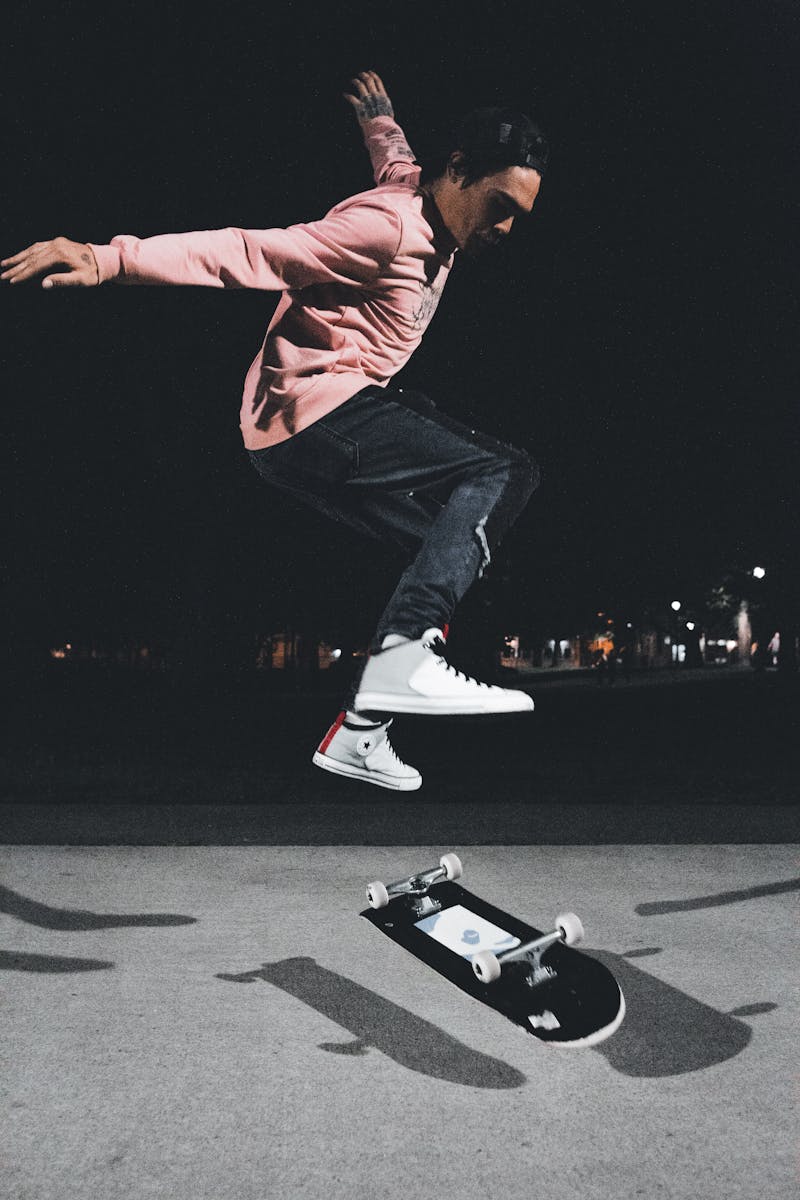
When to Replace Your Deck
The deck is the component that wears out fastest. Signs it is time for a new one:
- Razor tail: The tail (and sometimes the nose) gets worn down to a sharp, thin edge from popping ollies. When the tail is visibly thinner and the pop feels weak or mushy, it is time. Severe razor tail can also cause the tail to chip or split.
- Loss of pop: A fresh deck has a satisfying snap when you pop the tail. Over weeks or months, the wood loses this responsiveness. If your ollies feel lower despite good technique, the deck may be dead.
- Cracks and chips: Pressure cracks across the board (usually near the truck bolts) weaken the deck structurally. Small chips on the nose and tail are cosmetic, but deep cracks mean the board could snap.
- Waterlogging: If your board got soaked in rain and the wood warped or delaminated (layers separating), replace it. Wet wood loses all structural integrity.
Most street skaters replace their deck every 1 to 3 months depending on how often they skate. Transition skaters get more life from decks because park skating is less abusive on the tail and nose.
Grip Tape Maintenance and Replacement
Grip tape gets dirty and loses its grip over time. You can extend its life with basic cleaning:
- Rubber grip cleaner: A natural rubber block (sold as "grip gum" at skate shops) rubbed across dirty grip tape removes surface dirt and restores some traction.
- Soft brush: A medium-bristle brush can remove loose dirt and debris. Brush in one direction.
When to replace grip tape entirely:
- It feels slippery even after cleaning
- Large areas are worn smooth, especially where your front foot drags during ollies
- It is peeling off the edges of the deck
Replacing grip tape is straightforward: peel off the old tape (a hair dryer softens the adhesive), apply the new sheet, trim the edges with a razor blade, and file the edges smooth. Most skate shops will re-grip your board for free if you buy the tape there.
Bearing Cleaning
Dirty bearings slow you down. If your wheels do not spin freely or make grinding noises, the bearings need cleaning. Here is the process:
- Remove the wheels: Use a skate tool or socket wrench to remove the axle nut. Pull the wheel off — the bearings will usually stay on the axle. Pry them off gently.
- Remove the bearing shields: Most bearings have a rubber or metal shield on one side. Pop it off carefully with a pin or razor blade. (Some bearings have non-removable shields — you can still clean these, just less thoroughly.)
- Soak in solvent: Place the bearings in a container with isopropyl alcohol or a dedicated bearing cleaner (like Bones Bearing Cleaning Unit). Let them soak for 5 to 10 minutes, then agitate gently.
- Dry completely: Remove from solvent and let them air dry fully. Spinning them on a pencil helps. Any remaining moisture will cause rust.
- Lubricate: Add 1 to 2 drops of bearing-specific lubricant (like Bones Speed Cream) to each bearing. Spin to distribute.
- Reassemble: Replace the shields, press the bearings back into the wheels, and remount.
Clean your bearings every 1 to 2 months if you skate regularly, or immediately after riding through water, sand, or mud.
Truck Adjustment
Trucks have a kingpin nut that controls how loose or tight they turn. This is a personal preference adjustment, not a maintenance requirement — but knowing how to adjust it matters.
- Tighter trucks: More stable at speed, less turning. Good for technical street skating where you want the board to stay straight.
- Looser trucks: More responsive turning, better for carving and transition. Less stable at speed.
- Finding your preference: Start with trucks at medium tightness (the factory setting). Ride for a few sessions, then adjust one quarter-turn at a time until the board feels right.
Truck bushings — the rubber pieces inside the truck that control turning — wear out over time. Signs of worn bushings: the truck feels wobbly even when tightened, or the rubber is visibly cracked or deformed. Replacement bushings cost a few dollars and make a dramatic difference.
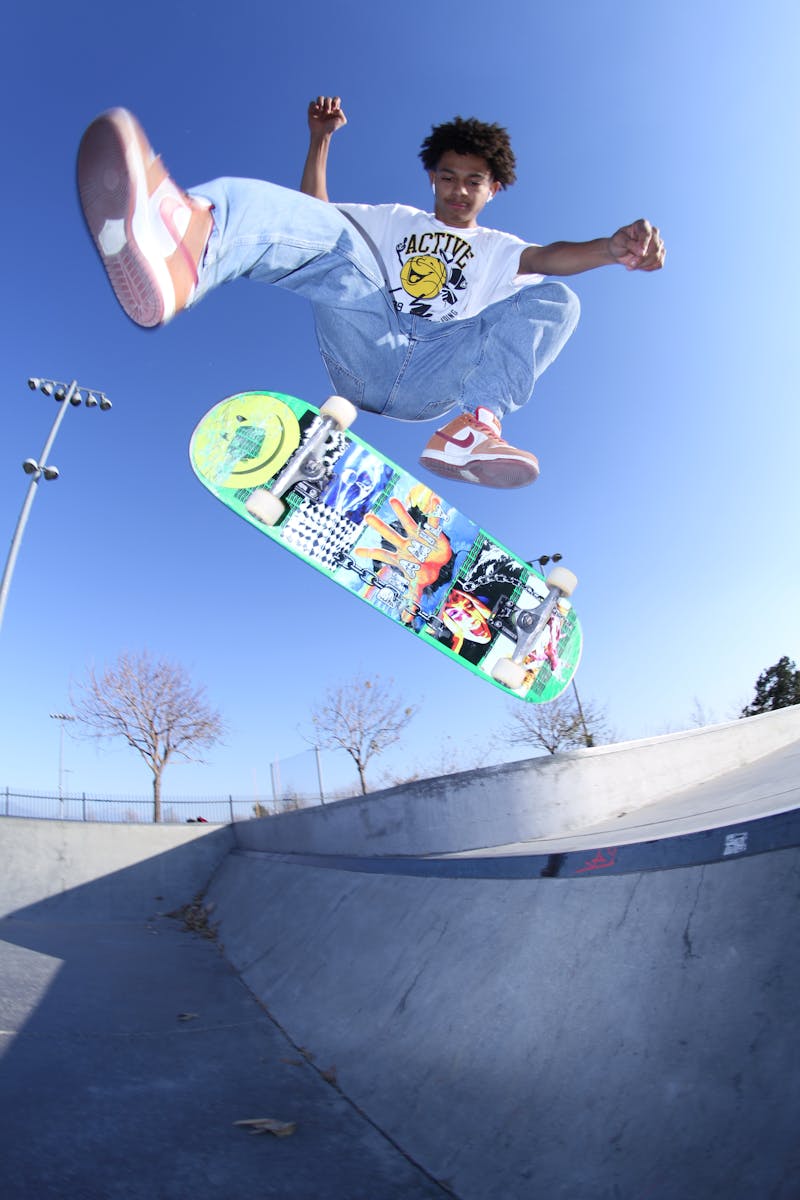
Wheel Rotation and Replacement
Skateboard wheels wear unevenly. If you do a lot of powerslides or always turn in one direction, some wheels will develop flat spots or cone shapes (one side worn more than the other).
To extend wheel life:
- Rotate wheels: Swap front and back wheels periodically. Also swap left and right, flipping the wheels so the worn side faces inward.
- Replace when flat-spotted: A flat spot causes a bumpy, vibrating ride. Once a wheel has a noticeable flat spot, it will not round out — replace the set.
- Replace when too small: As wheels wear down, they get smaller. When they are noticeably smaller than their original size (more than 2-3mm of wear), they roll slower and feel less stable.
Hardware Check
A quick hardware check before each session takes 10 seconds and prevents problems:
- Check that all 8 truck bolts are tight. Loose hardware causes the trucks to shift on the deck.
- Spin each wheel to make sure nothing is rubbing or stuck.
- Check the axle nuts — they should be snug but not overtightened (the wheel should still spin freely).
- Look for pressure cracks near the truck bolts on the deck.
Storing Your Board
Proper storage is simple but important:
- Keep your board indoors and dry. Rain and humidity are the enemy of wood decks and steel bearings.
- Do not leave it in a hot car — heat can warp the deck and melt bearing lubricant.
- Store it flat or leaning against a wall. Do not stack heavy objects on top of it.
Tools You Need
A single skate tool (T-tool) handles almost every maintenance task. It includes:
- Socket for axle nuts (1/2 inch)
- Socket for kingpin nut (9/16 inch)
- Socket for hardware bolts (3/8 inch)
- Allen key for Allen-head hardware
A skate tool costs $10 to $20 and fits in your back pocket. Every skater should own one.
For more on choosing the right components, read our complete skateboard buying guide. And for inspiration to get out and ride, browse the latest skateboarding footage on sk8dreams.