Skateboarding is often discussed as a single activity, but it contains distinct disciplines with different terrain, tricks, culture, and even equipment preferences. The two most prominent are street skateboarding and park (transition) skateboarding. Understanding the differences helps you decide where to focus your progression — or appreciate both when watching footage on platforms like sk8dreams.
Terrain: Where You Skate
The most fundamental difference is the terrain itself.
Street skateboarding uses urban architecture as obstacles. Stairs, handrails, ledges, benches, gaps, manual pads, curbs, banks — anything in the built environment can become a feature. Street skaters often travel to find spots, and the best street footage showcases creative use of architecture that was never designed for skating.
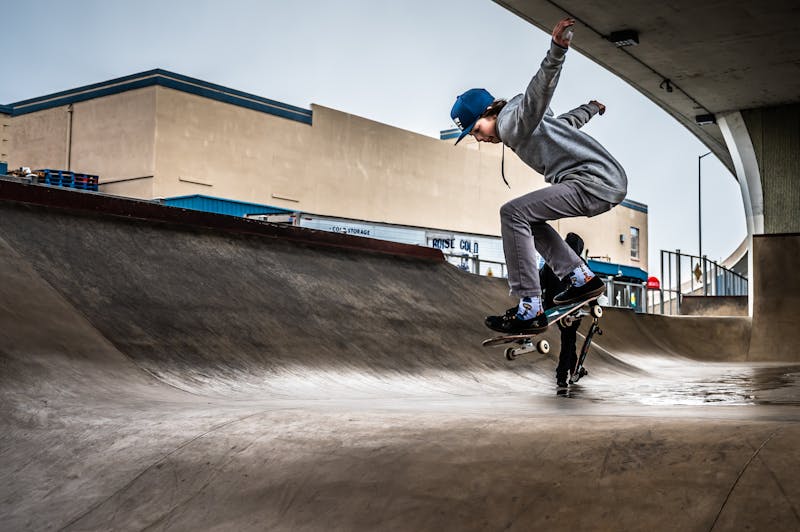
Park skateboarding takes place in purpose-built skateparks or natural terrain that mimics skatepark features. Bowls, quarterpipes, halfpipes, spines, hips, and coping are the standard elements. Park skating is rooted in transition — the curved surfaces that allow skaters to gain speed and launch into the air.
Some skateparks include both street and transition features, creating hybrid environments where both disciplines overlap. But at the competitive and cultural level, they remain distinct.
Tricks: What You Do
The trick vocabularies overlap but have different emphases.
Street tricks center on flip tricks (kickflips, heelflips, tre flips), grinds and slides (50-50, nosegrind, crooked grind, boardslide, lipslide), and combinations of both. Ollies, nollies, and switch stance tricks add complexity. A street line might be: ollie up a ledge, kickflip out, manual to the next obstacle, frontside boardslide down a rail.
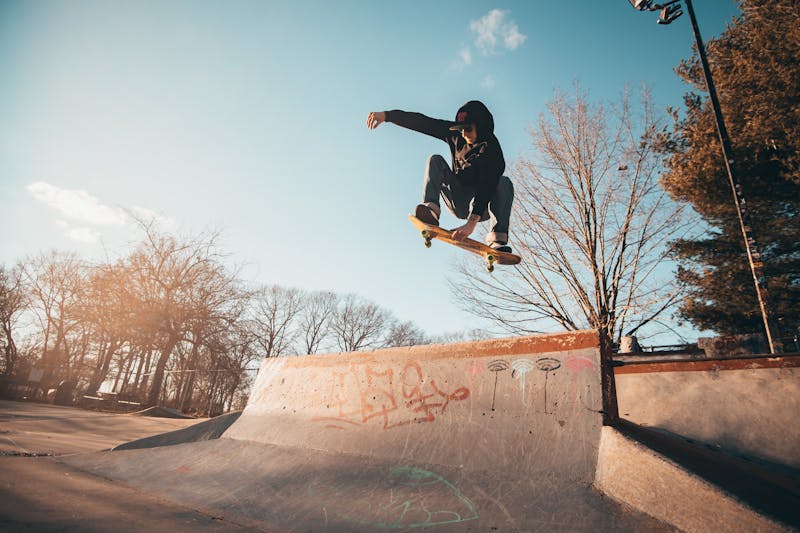
Park tricks center on airs (getting above the coping), grinds on coping (5-0, smith grind, feeble), lip tricks (axle stall, rock to fakie, disaster), and grabs (indy, melon, stalefish). Speed and flow matter more than individual trick complexity. A park run might be: carve into a bowl, frontside air over the hip, backside smith grind, indy grab transfer to the next section.
Style and Culture
Street and park skateboarding have developed different cultural identities.
Street culture values creativity, spot selection, and individuality. Finding a unique spot and doing something original on it carries more cultural weight than executing a technically difficult trick on a well-known spot. Street skating has a DIY ethos — you work with what the city gives you. The culture is closely tied to video parts, where a skater's full section in a video defines their reputation.
Park culture values flow, power, and amplitude. The ability to maintain speed through a run, link tricks without stopping, and go big on airs is respected above all. Park skating has closer ties to surfing and vert skating, sharing a vocabulary of carving, pumping, and reading the terrain's curves.
Both cultures overlap significantly. Many skaters are comfortable in both environments, and the best skaters often bring elements of one discipline into the other — a street skater who can flow through a bowl, or a transition skater who does technical flip tricks over a hip.
Competition Format
Since skateboarding entered the Olympics in 2021, the distinction between street and park has become formalized in competition:
- Street competition: Skaters perform on a course with stairs, rails, ledges, gaps, and manual pads. Runs are typically 45 seconds, plus individual "best trick" attempts. Judging emphasizes difficulty, execution, and variety.
- Park competition: Skaters perform in a bowl or park course with transition features. Runs are typically 45 seconds. Judging emphasizes flow, difficulty, amplitude (height of airs), and use of the full course.
The competition formats highlight the core differences: street rewards technical precision and difficulty on individual obstacles, while park rewards connected lines and the ability to use the entire terrain.
Equipment Differences
While both disciplines use standard skateboards, subtle equipment preferences exist:
- Deck size: Street skaters tend toward 7.75 to 8.25 inch decks (lighter, easier to flip). Park skaters often prefer 8.25 to 8.5+ inch decks (more stable at speed and on transition).
- Wheels: Street wheels are typically 50-53mm and very hard (99a-101a) for sliding on ledges. Park wheels are often 54-58mm and slightly softer (97a-99a) for grip on transition surfaces.
- Trucks: Street skaters often prefer lower trucks for stability on grinds. Park skaters may use higher trucks for more turning radius and to accommodate larger wheels.
These are preferences, not rules. Many skaters use the same setup for both. If you are starting out, check our complete buying guide for recommendations that work across both disciplines.
Which Should You Learn?
The honest answer: try both. Most skaters naturally gravitate toward one style based on what is available and what feels right. If you live in a city with good urban architecture and no skatepark nearby, you will probably start with street. If your local park has a great bowl, you might fall in love with transition.
There is no wrong choice, and skills transfer between disciplines. The ollie, which is the foundation of street skating, is also useful in park. And the comfort with speed and commitment that park skating builds will make you a better street skater too.
For a deeper look at street skating fundamentals, read our street skateboarding guide for beginners. And to watch both street and park footage, browse the curated collection on sk8dreams — seeing both styles in action is the best way to figure out which one speaks to you.