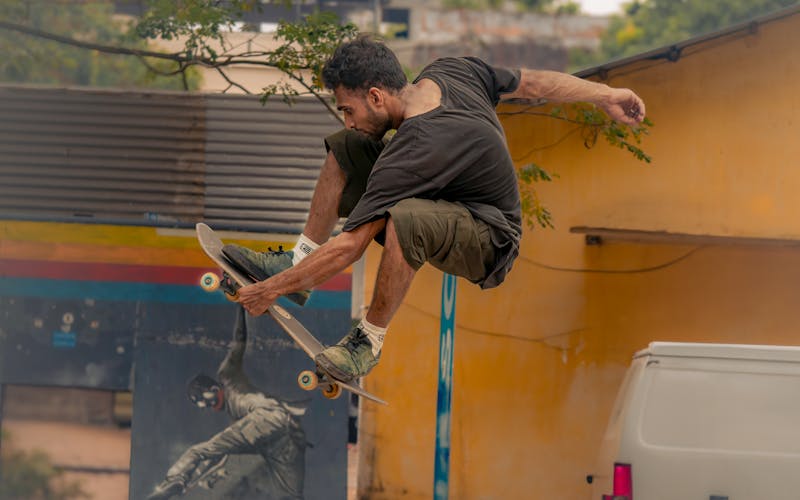
Mark Gonzales — universally known as "the Gonz" — did not just participate in the birth of street skateboarding. He invented it. Born June 1, 1968, in South Gate, California, Gonzales was the first skater to look at a city and see a skatepark. Handrails were not barriers — they were grinds. Gaps were not dangers — they were opportunities. Stairs were not for walking. In the process, he redefined what skateboarding could be, fusing athletic ability with a restless artistic vision that extends far beyond the board.
Before the Gonz
To understand what Gonzales did, you need to understand what skateboarding looked like before him. In the early-to-mid 1980s, skateboarding was dominated by vert — riding halfpipes and pools with aerial tricks. Street skating existed only in a primitive form: riding curbs, doing bonelesses, and basic freestyle tricks on flat ground.
Gonzales changed the scale. In 1986, he ollied over a chain on a sidewalk — a small act that opened an enormous door. If you could ollie over something, you could ollie onto something. If you could ollie onto a ledge, you could grind it. If you could grind a ledge, why not a handrail? The logic was simple; the execution required a completely new way of seeing the built environment.
Video Days: The Film That Changed Everything
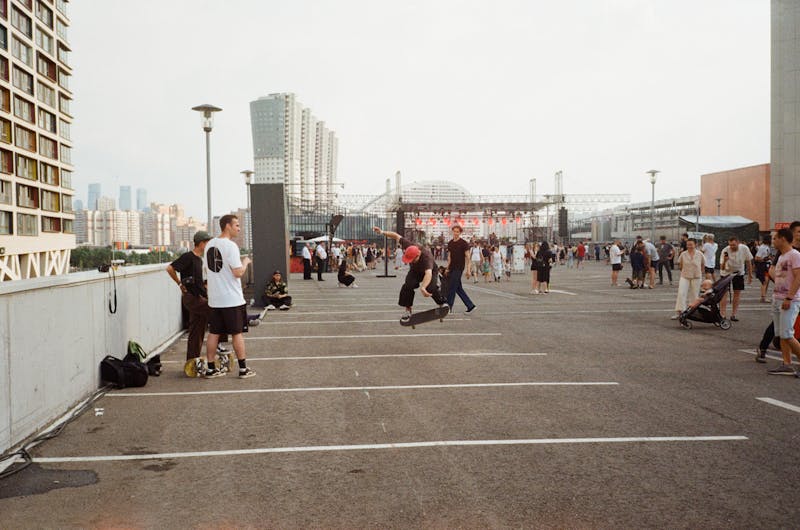
In 1991, Spike Jonze directed Video Days for Blind Skateboards — the company Gonzales co-founded with Mark "Natas" Kaupas. The video is widely regarded as the most influential skate video ever made. Gonzales' part, set to John Lee Hooker's "Dimples," showed skating that was simultaneously technical, creative, and free.
He was not just doing tricks — he was flowing through the city with the improvisational energy of a jazz musician. He would ollie a trash can, manual across a parking lot, and wallride a random wall, stringing movements together in ways no one had imagined. Video Days proved that skateboarding could be art, not just athletics.
Blind and Beyond
Gonzales founded Blind Skateboards in 1989, one of the first skater-owned companies in the modern sense. The team included Jason Lee (later the actor), Guy Mariano, and Rudy Johnson. Blind's approach — irreverent graphics, lo-fi videos, technical street skating — became the template for the 1990s skate industry.
After leaving Blind, Gonzales rode for ATM Click, Real Skateboards, and Krooked — the brand he founded under the Deluxe Distribution umbrella. Krooked reflects Gonzales' aesthetic perfectly: hand-drawn graphics, playful shapes, and a refusal to take anything too seriously.
The Artist
What sets Gonzales apart from every other skater is that his creativity extends far beyond the board. He is a legitimate visual artist whose work has been exhibited in galleries worldwide, including shows in New York, Paris, Tokyo, and London. His art style — childlike drawings, stream-of-consciousness poetry, bright colors, and spontaneous compositions — mirrors his skating: intuitive, joyful, and unconcerned with conventional expectations.
He has published multiple books of poetry and art, designed album covers, and collaborated with fashion brands including Adidas and Supreme. But unlike many skater-celebrity crossovers, Gonzales' art career is not a side project. It is an equal expression of the same creative impulse that drove him to invent street skating.
Influence on Culture
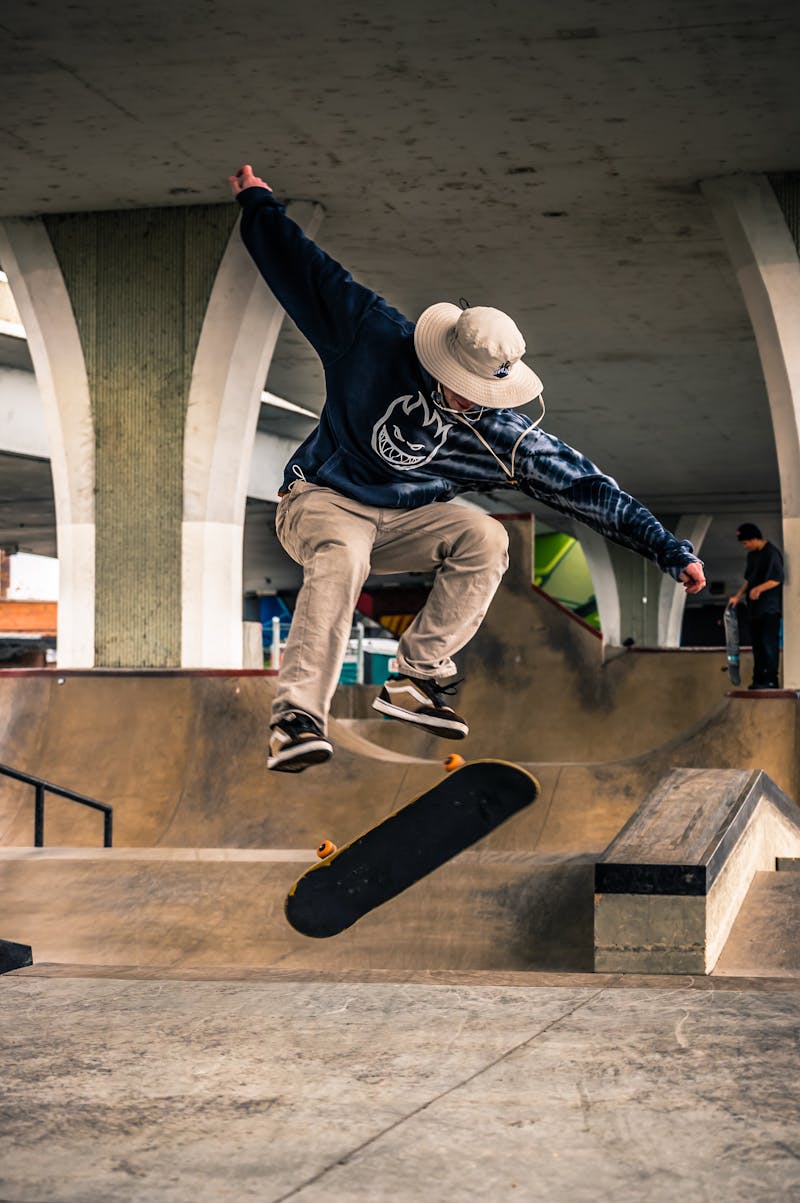
Gonzales' influence is so pervasive that it is easy to overlook. Every skater who grinds a handrail, every brand that uses hand-drawn graphics, every video that prioritizes flow and creativity over pure technicality — all of it traces back to the Gonz.
He influenced not just how people skate, but how the skate industry operates. The idea that a skater could be an artist, a brand founder, a filmmaker, and a cultural figure simultaneously — that model started with Gonzales. Skaters like Rodney Mullen invented tricks; Gonzales invented a way of being.
The Creative Approach
What makes Gonzales' legacy unique is his approach to skateboarding as an open-ended creative practice. While other skaters focused on mastering specific tricks or winning competitions, Gonzales treated every session as improvisation. He would invent tricks on the spot, approach familiar spots from unfamiliar angles, and value surprise over perfection.
This philosophy influenced generations of skaters who value creativity over raw technical ability — a lineage that includes Jerry Hsu, Mark Suciu, and Sage Elsesser. These skaters cite Gonzales as a primary influence, not for specific tricks, but for the permission to treat skating as personal expression.
Legacy
Now in his late fifties, Gonzales still skates, still makes art, and still approaches both with the playful energy of a teenager. He does not compete. He does not chase trends. He simply continues creating, as he has for four decades.
The Gonz is proof that skateboarding, at its best, is not a sport — it is an art form. And like all great art, its value comes not from technical perfection but from authentic self-expression.
Explore the creative side of skateboarding on sk8dreams — from street footage to artistic approaches that carry the Gonz's spirit forward.