The ollie is the most important trick in skateboarding. It is the foundation of nearly every other street trick — kickflips, heelflips, grinds, and gaps all begin with an ollie. If you are learning to skateboard, the ollie is where real progression starts.
This guide breaks down the ollie into individual steps, covers common mistakes, and gives you a realistic timeline for learning it. No shortcuts — just the mechanics explained clearly.
What Is an Ollie?
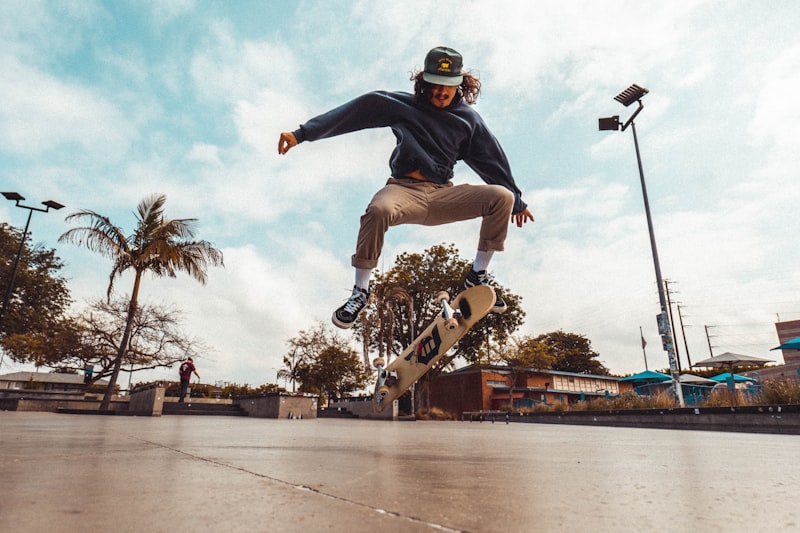
An ollie is a jump where the skateboard comes off the ground with you, without using your hands. It was invented by Alan Gelfand for vert skating in 1978 and adapted to flat ground by Rodney Mullen in the early 1980s. The flat ground ollie made modern street skateboarding possible — you can read more about Mullen's contributions in our Rodney Mullen article.
The physics are straightforward: you pop the tail of the board against the ground, then drag your front foot up the board to level it out in the air. The board sticks to your feet through friction and timing, not magnets or straps.
Step 1: Foot Placement
Before anything else, get your feet in the right position:
- Back foot: Place the ball of your back foot on the tail of the board — the curved part at the back. Your toes should be near the edge, not in the center. This gives you maximum pop.
- Front foot: Place your front foot in the middle of the board, slightly behind the front truck bolts. Angle it slightly — about 30 to 45 degrees from straight. This foot will slide up during the ollie.
- Weight distribution: Keep your weight centered over the board. Do not lean forward or backward.
Step 2: The Pop
The pop is what launches the board into the air. Here is how it works:
- Bend your knees. The deeper you crouch, the higher you can jump.
- Snap your back foot down sharply. The tail should hit the ground and bounce immediately — this is the "pop" sound.
- As you pop, jump upward with your whole body. The pop and the jump happen almost simultaneously.
A common mistake is popping without jumping. If your body does not leave the ground, the board has nothing to follow. The pop creates the board's upward motion; your jump creates space for it to rise.
Step 3: The Front Foot Slide
This is the part that feels unnatural at first. Immediately after popping:
- Drag your front foot forward and upward along the board. The side of your shoe — near the pinky toe area — slides against the grip tape.
- This sliding motion pulls the board upward and levels it out in the air.
- The harder and higher you slide your front foot, the higher the ollie.
The front foot slide is what separates an ollie from just stomping on the tail. Without it, the board tilts nose-up and does not level out.
Step 4: Leveling Out and Landing
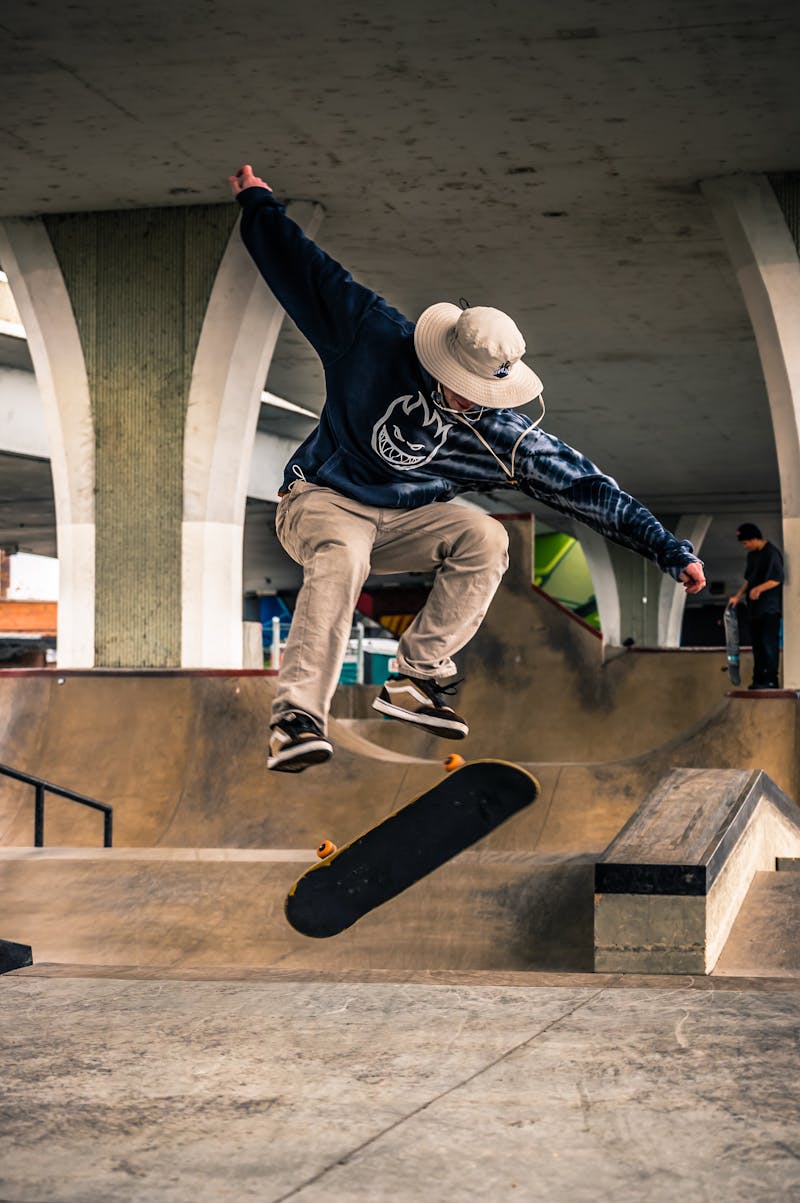
At the peak of your ollie:
- Push your front foot forward slightly to level the board horizontally.
- Bring your back foot up to meet the board — do not leave it hanging below the tail.
- Both feet should be over the truck bolts for a stable landing.
- Absorb the landing with bent knees. Stiff legs on landing lead to slipped boards and sore ankles.
Common Mistakes and Fixes
Almost every beginner makes the same mistakes. Here are the most common ones and how to fix them:
- Board shoots out in front: You are leaning too far back. Keep your shoulders directly over the board and center your weight.
- Board does not leave the ground: You are not jumping. Focus on the jump first, then add the pop. Many beginners concentrate so hard on popping that they forget to actually leave the ground.
- Board goes up nose-first but does not level: Your front foot slide is missing or too weak. Exaggerate the drag upward — it should feel like you are trying to kick the nose of the board.
- Landing with feet off the board: This is a commitment issue. Stay over the board and focus on landing with bent knees. Practicing while stationary or on grass can help build confidence.
- Inconsistent pop: Your back foot placement is off. Make sure the ball of your foot is on the tail's edge, not the center.
Practice Tips
Realistic expectations will keep you motivated:
- Start stationary: Practice the ollie motion while standing still or on carpet or grass. This removes the fear of rolling and lets you focus on mechanics.
- Then add slow rolling: Once you can ollie stationary, try it while rolling slowly. The motion changes slightly when moving.
- Set small goals: Ollie over a crack in the pavement. Then a stick. Then a small object. Incremental progress is real progress.
- Film yourself: Compare your form to tutorial videos. You will immediately see what is different.
- Expect weeks, not days: Most skaters take 2 to 8 weeks to land a consistent ollie. Some take longer. This is normal.
What Comes After the Ollie
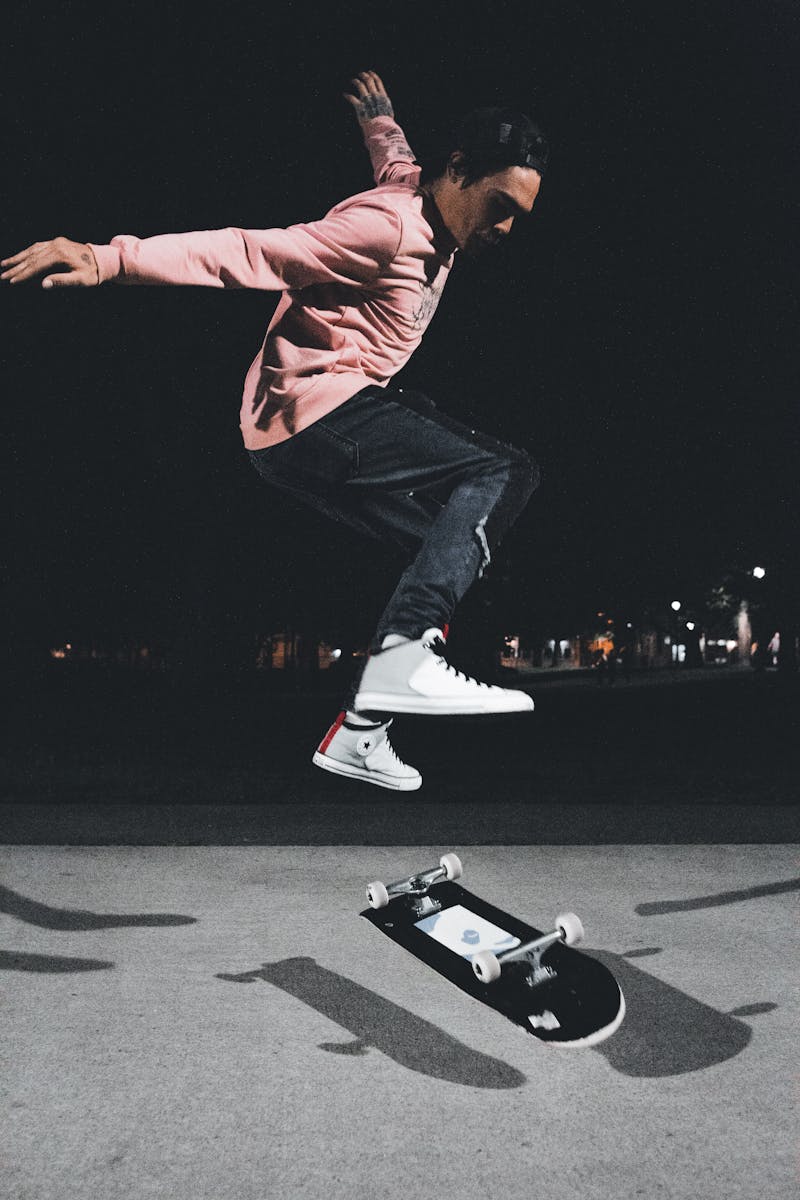
Once you can ollie consistently while rolling, the entire world of street skateboarding opens up. The next tricks to learn are typically:
- Frontside 180: An ollie with a half-rotation.
- Pop shove-it: The board spins 180 degrees under your feet.
- Kickflip: A flick off the front foot makes the board flip.
For a complete list of fundamental tricks, check out our top 10 tricks every skater should learn.
Watch ollie tutorials and flatground skating on sk8dreams to see proper technique in action. Watching skilled skaters ollie — paying attention to their timing, foot position, and body mechanics — is one of the most effective learning tools available.